
In US International Trade Commission (ITC) Investigation No. 337-TA-1526, Vicor names both power module suppliers and system manufacturers as respondents. Beyond whether products infringe, the parties dispute which components the investigation should cover, how overseas manufacturing connects to US imports, and who performs the accused assembly steps. The effect of possible import restrictions on AI data center supply is another point of contention.
Monolithic Power Systems (MPS), Infineon Technologies AG, Celestica Inc. and Luxshare submitted different objections before institution, and Vicor responded separately. Their filings reflect their positions in the supply chain: module suppliers object to general-purpose products being swept into the investigation, system manufacturers demand more specific allegations, and Vicor seeks to trace responsibility from modules to computing systems. On October 9, 2026, the ITC instituted the investigation using the proposed product description and naming these companies among the respondents. Institution does not resolve the parties’ infringement disputes.
The earlier introduction to the Vicor investigation (Chinese) describes the accused products and supply-chain relationships. This article examines the parties’ pre-institution submissions.
The disputes at a glance
The table summarizes the respondents’ objections and Vicor’s replies. Google’s Tensor Processing Unit (TPU), mentioned below, is a chip used for AI computing.
| Issue | Respondents’ principal objections | Vicor’s response |
|---|---|---|
| Which products should be investigated? | MPS considers the proposed description overbroad; Infineon also objects to the possible inclusion of general-purpose power components. | Product design intent and limitations from only some asserted claims should not exclude potentially infringing products at institution. |
| What connects a respondent to US imports? | Infineon and Celestica argue that exhibitions, overseas manufacturing and a customer’s US use do not identify specific importation or sales by the named respondent. | Overseas manufacturing and component supply can connect a respondent to products imported into the United States. |
| Who performs the accused assembly? | Celestica says it does not perform the claimed power conversion module assembly steps, and that the complaint does not allege that it does. | Vicor alleges that Celestica assembles accused power modules into TPU systems, and also alleges induced and contributory infringement. |
| What happens to supply if imports are restricted? | Luxshare, Infineon and Celestica point to fewer qualified suppliers, redesign and requalification, and delays to data center deployment. | Vicor says licensed customers can continue purchasing, other customers can obtain licenses or use alternatives, and Vicor is expanding capacity. |
MPS: Potential use in vertical power delivery should not bring every module into the investigation
MPS argues that Vicor’s proposed plain-language description is too broad and insufficiently specific. The description covers vertical power delivery systems, components and computing systems containing them, for specified data center, AI and cloud computing uses. MPS responds that “vertical power delivery” describes an arrangement rather than a sufficiently defined product category.
A power module can sit beside a processor, with current traveling laterally through the circuit board, or be placed beneath the processor for vertical delivery. MPS says it offers dozens of power modules, many of which could potentially be used for Z-Axis Power Delivery (ZPD), its term for vertical power delivery, although the vast majority were designed for lateral power delivery. Including them simply because they might be used vertically would, it argues, impose discovery burdens and expose products primarily intended for lateral delivery to exclusion.
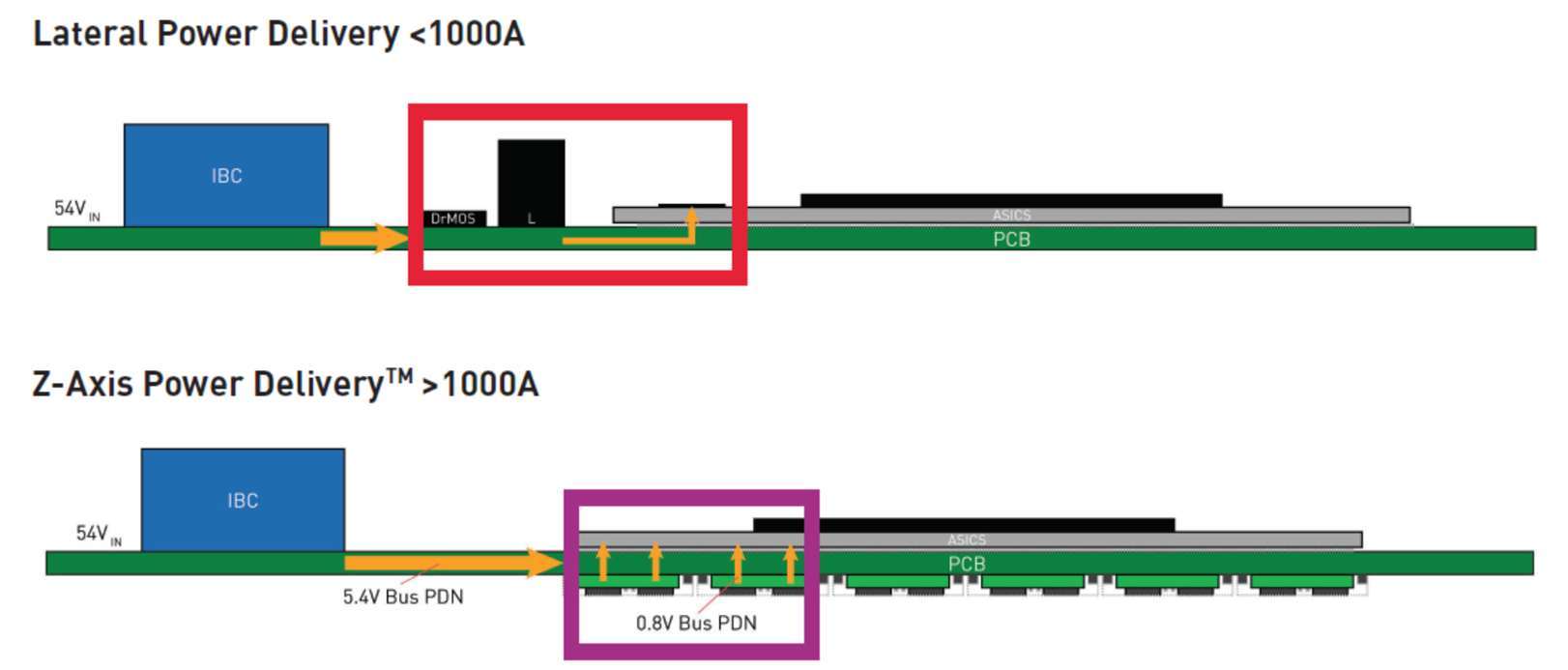
MPS proposes a narrower description focused on a stack of a power converter, interconnection structure and load, and on components specifically designed for that arrangement. It seeks to exclude products specifically designed for lateral power delivery, arguing that Vicor’s patent concerns particular structures rather than all vertical power delivery technology.
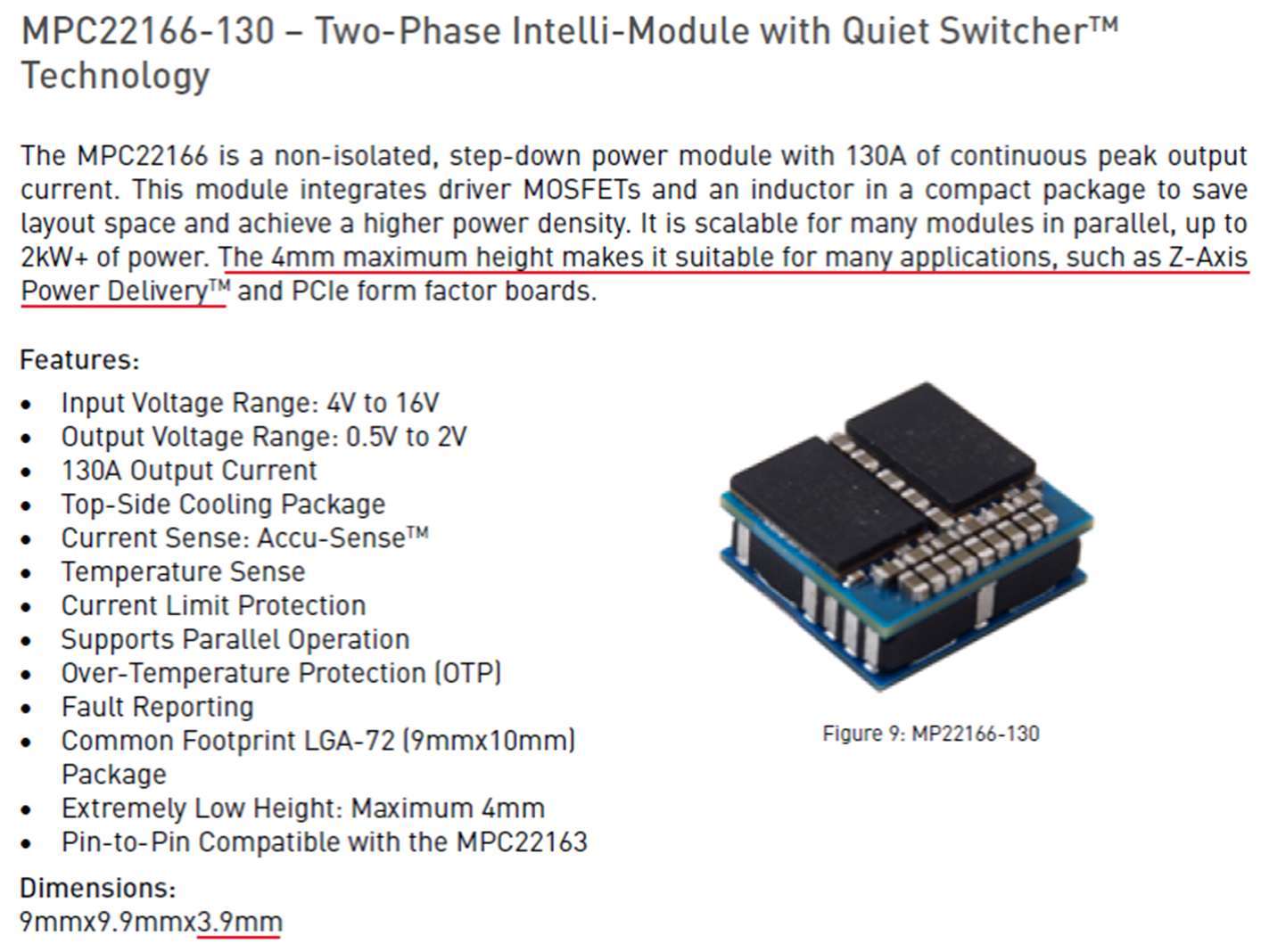
Vicor responds that defining a product category at institution should not become a premature infringement determination. It argues that the structural restrictions MPS proposes appear in only some asserted claims; imposing them on the entire investigation would exclude products potentially covered by other claims. Claims define what a patent protects, and different claims need not require identical components.
Vicor also rejects design intent as a basis for exclusion. In its view, the inquiry should examine how the particular product is arranged in the accused system and whether it meets the relevant claim limitations, rather than depend on a supplier’s intended-use classification.
Infineon: Do a US exhibition and supplies to Delta establish the required importation nexus?
Infineon’s objections focus on corporate identity and the transaction chain. The named respondent is the German parent, Infineon Technologies AG. Infineon states that personnel from the unnamed US affiliate it calls Infineon Americas staffed the US exhibition booth cited in the complaint. It argues that the display does not identify specific importation or sales by the named German company.
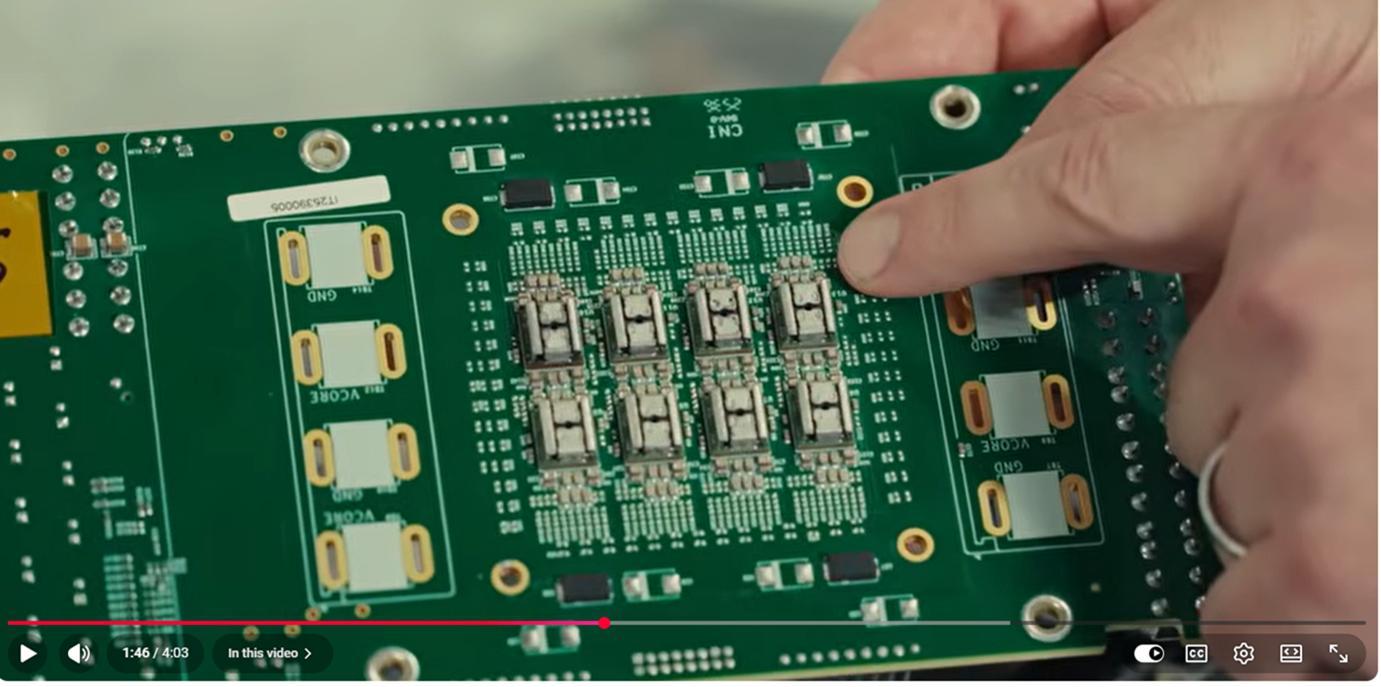
Vicor also relies on the relationship between OptiMOS products and Delta Electronics power modules to connect overseas component supply to the US market. Infineon argues that the collaboration evidence does not identify a particular import or sale by the German parent, and that the importer alleged in the complaint is Delta.
Vicor takes a supply-chain approach. It argues that a respondent need not itself bring a product through US customs: sales or component supplies for products destined for the US can establish the necessary connection. According to Vicor, the overseas-manufactured TDM24545S was displayed in the United States, and OptiMOS components were incorporated into Delta’s vertical power delivery products imported into the country.
The dispute concerns the specificity of the evidence. Infineon demands identification of the named company’s products and importation or sales. Vicor argues that the alleged overseas manufacturing, US exhibition and supplies to Delta establish an adequate nexus, and emphasizes that Infineon does not deny the relevant manufacturing and supply activities.
Infineon also raises a product-scope objection similar to MPS’s. It argues that an expansive reference to components could affect general-purpose power devices used in automotive and industrial applications, and that customs officers may be unable to determine end use from the component alone. It requests exclusion of discrete power semiconductors and power stages not specifically designed for vertical power delivery, or removal of the reference to components.
Celestica: Does manufacturing a TPU system mean performing the patented assembly method?
Celestica likewise challenges the importation allegations. Vicor links information obtained at a Thai factory about Google TPUv5 and Flex modules to Google’s use of the equipment in the United States. Celestica argues that this does not identify its own importation activities. It also says the complaint provides no specific facts connecting it to Delta, Luxshare or MPS modules.
Vicor replies that it identifies TPUv5 systems manufactured in Thailand for Google under the name ViperFish, with product names, part numbers, a customer and confidential exhibits. It argues that these business-to-business computing systems are not retail products readily available for public purchase, and that its evidence sufficiently identifies the accused products.
Celestica then turns to assembly. For method claims, the issue includes who performs the asserted steps, not just what the finished equipment looks like. Celestica expressly denies performing the claimed power conversion module assembly steps and says the complaint does not allege otherwise. For apparatus claims, it also seeks identification of the accused modules, the apparatus containing them, and who imports or sells it.
Vicor argues that Celestica, as a system manufacturer, assembles accused power modules into TPUv5 systems and thereby practices the claimed assembly methods. It also alleges induced and contributory infringement, including inducing customers to use accused systems and supplying products constituting a material part of the patented invention.
The claim language suggests two assembly levels to distinguish: attaching a power conversion module to an interconnection module, and integrating an assembled power delivery unit into a computing system. Some method claims describe the former, including how the conversion module and interconnection module connect. If a module supplier has already completed those steps and a system manufacturer performs only subsequent system integration, the actual work must still be compared with the claims. Calling both activities “assembly” does not establish that they are the same. Evidence is needed to determine which operations Celestica performs.
Could the supply chain absorb import restrictions?
Luxshare, Infineon and Celestica raise public-interest concerns about the AI supply chain. They argue that data centers rely on customer-qualified suppliers. Excluding several suppliers could require redesign, supplier changes and requalification, increasing costs and lead times and potentially delaying deployment. They also question whether Vicor could fill the resulting gap within a reasonable period, citing its earlier disclosures about lead times, orders and capacity constraints. In their view, the existence of an alternative product does not establish timely availability.
Vicor responds that it need not replace all affected supplies itself. It says customers with licenses can continue purchasing from respondents, while others can seek licenses or use non-infringing alternatives. Vicor also points to its own supply capability and expansion plans.
The disagreement therefore concerns more than whether alternatives exist. It includes access to appropriate licenses, qualification of alternatives, and whether capacity and delivery schedules meet demand. These questions are distinct from infringement, but matter to procurement, system design and data center deployment.
Further reading
- Introduction to the Vicor investigation (Chinese)
- Vicor: How Is Power Delivered Vertically to a Chip? (Chinese)
References
- Notice of Institution of Investigation
- Verified Complaint of Vicor Corporation Under Section 337 of the Tariff Act of 1930
- Proposed Respondents Monolithic Power Systems, Inc., Chengdu Monolithic Power Systems Co., Ltd. and MPS International (Shanghai) Ltd.’s Request to Modify Complainant Vicor Corporation’s Proposed “Plain Language” Statement and Scope of the Investigation
- Complainant Vicor Corporation’s Response to Proposed Respondents Monolithic Power Systems, Inc., Chengdu Monolithic Power Systems Co., Ltd. and MPS International (Shanghai) Ltd.’s Request to Modify Complainant Vicor Corporation’s Proposed “Plain Language” Statement and Scope of the Investigation
- Proposed Respondent Infineon Technologies AG’s Request Not to Institute as to Infineon Technologies AG and Public Interest Statement
- Complainant Vicor Corporation’s Response to the Public Interest Statement and Request Not to Institute of Proposed Respondent Infineon Technologies AG
- Request for Non-Institution & Public Interest Statement of Proposed Respondent Celestica Inc. (Exhibit A)
- Complainant Vicor Corporation’s Response to the Request for Non-Institution & Public Interest Statement of Proposed Respondent Celestica Inc.
- Proposed Respondents Luxshare Precision Industry Co., Ltd. and Dongguan Luxshare Technology Co., Ltd. a/k/a Luxshare-Tech’s Public Interest Statement
- Complainant Vicor Corporation’s Response to the Proposed Respondents Luxshare Precision Industry Co., Ltd. and Dongguan Luxshare Technology Co., Ltd. a/k/a Luxshare-Tech Public Interest Statement
- US10903734B1 full text