
Xpeng Motors Accused of Patent Infringement in Europe: How Good Is Indian Steel Giant ArcelorMittal’s Patent Strategy?
On November 1, 2024, the Indian steel company ArcelorMittal filed a patent lawsuit at the Unified Patent Court (UPC) in Paris against China’s Xpeng Motors, targeting its flagship SUV, the G9. Positioned in the premium market, the G9 sells in Europe for €57,600 to €69,600. Xpeng is actively promoting the G9 in Europe, aiming to increase brand influence by expanding its presence across multiple countries.
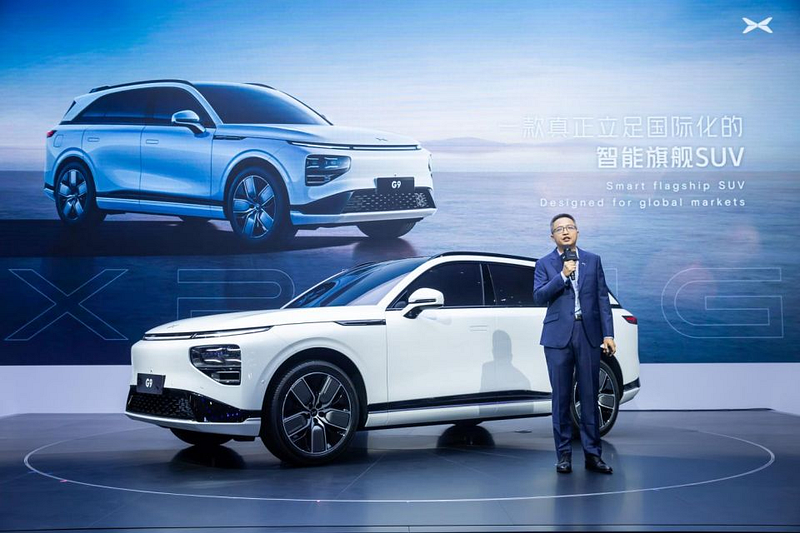
Xpeng Motors’ flagship SUV, the “Xpeng G9.” On the right is Xpeng Motors President, Xia Heng. Source: Xpeng Motors official website.
According to media, ArcelorMittal claims that the thermoformed materials used in the G9 infringe on its European patent EP3290200B1. This patent primarily covers the manufacturing process, applications, and end products of coated steel strips.
The IP blog ip fray suggests that ArcelorMittal may be aiming to pressure Xpeng into purchasing specific steel products. The lawsuit names 17 defendants, including Xpeng’s affiliates and European distributors like Germany’s Moll in Düsseldorf and Luxembourg’s Hedin. Xpeng responded, stating: “Xpeng’s intellectual property team, along with its procurement and manufacturing departments, ensured that the materials used in the G9 met compliance standards in target markets by working with specified suppliers to avoid any infringement risks. Xpeng is currently communicating with ArcelorMittal and has asked its suppliers to verify that materials meet the company’s requirements.”
In other words, Xpeng appears to have been aware of ArcelorMittal’s patent in advance and attempted to use non-infringing materials. However, whether these efforts were sufficient is now for the courts to decide. Interestingly, Xpeng’s first reaction is requesting its suppliers to verify material sources — could this suggest prior knowledge of potential issues?
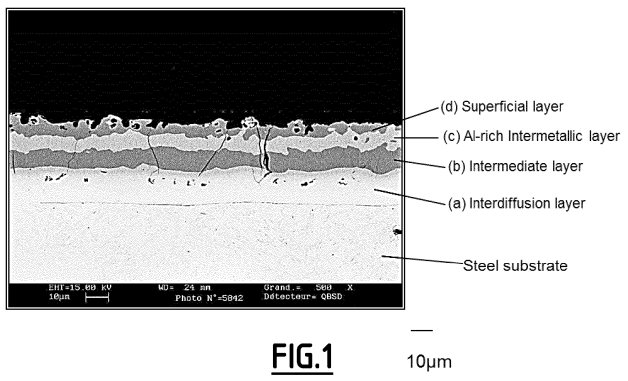
The disputed patent EP3290200B1 showd the layered structure of the steel coating.
This lawsuit is not surprising. ArcelorMittal, one of the world’s largest steelmakers, dominates the high-strength automotive steel market with its aluminum-silicon alloy-coated thermoformed steel technology. This technology prevents oxidation at high temperatures and cuts steel weight by half. Due to its high cost, this steel is typically reserved for specific reinforcement points in vehicles, such as the A-pillar. ArcelorMittal has developed an extensive international patent portfolio for this technology. In addition to direct sales, it licenses its technology for others to produce thermoformed steel, including Japan’s Nippon Steel and South Korea’s Hyundai Steel, partly as a strategy to avoid antitrust scrutiny.
China, the largest consumer of high-strength steel globally, presents an attractive market for unauthorized aluminum-silicon-coated thermoformed steel, given ArcelorMittal’s 60% price premium over standard high-strength steel. ArcelorMittal has filed multiple patent lawsuits in China for this reason. As the market for thermoformed steel is monopolized, ArcelorMittal can estimate unauthorized usage simply by comparing defendants’ vehicle production volumes with their purchases from ArcelorMittal’s Chinese distributors. However, ArcelorMittal later withdrew these lawsuits for undisclosed reasons.
Although ArcelorMittal’s technology is primarily the steel manufacturing processes, many of its patent claims are written in terms of thickness of different coatings, making it easier to detect infringement in finished products. Chinese media reveal that several companies have tried to avoid ArcelorMittal’s patents. For example, while U.S.-based AK Steel won the lawsuits against ArcelorMittal, its alternative design lowered the steel’s strength, limiting its market competitiveness. Other companies, attempting to circumvent the patent by using higher temperatures than specified in the patents, also found their steel’s toughness significantly reduced.
ArcelorMittal has even targeted potential areas of competition, such as galvanized steel, with its own patents, trying to wall off competitors. The only potential relief for automakers is that ArcelorMittal’s patent is set to expire in 2026. Whether this will affect high-strength steel prices, or if ArcelorMittal has other means to maintain its market hold, remains to be seen.