
The cold truth? AI isn’t just replacing some workers — it’s going to displace a massive portion of the workforce.
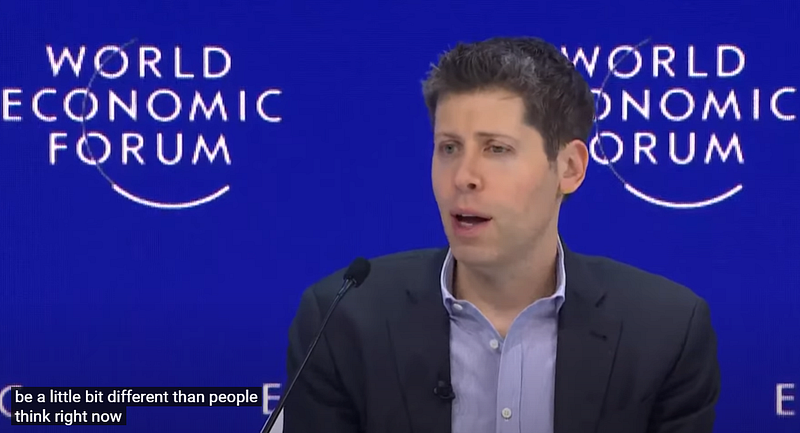
OpenAI CEO Sam Altman speaks at World Economic Forum. Source: Reuters
The scary thing about AI is that it has stepped into the sacred area of creation, challenging the existence and value of humans.
Imagination and creativity were like superpowers everyone thought only humans had. Creators turn their ideas into things we can all experience, like songs, stories, pictures, and even dances. What they create becomes art, like a special mark that says they existed.
New tech, like phones and cars, just adds comfort. We’re still the ones in charge, thinking for ourselves. But AI is something new. It’s like taking our thoughts and mass-producing them, making us question our uniqueness.
Thankfully, AI isn’t perfect yet, giving creators breathing room to adapt. While AI-made content often falls short (critics are right about that!), ignoring its potential would be a big mistake. The human brain took millions of years to evolve, but AI is getting smarter everyday.
Even if AI never reaches the level of humans, it can definitely meet the needs of most people due to humans’ natural limits. Vinyl records have the best sound quality, but only a tiny minority can tell the difference. When two pieces of music play at the same time, how many people can identify which one has that unique human “soul”?
Atomic bomb ended a war, but hangs over us. The internet connects the world, but breeds lies. Throughout history, we’ve embraced useful inventions, even with dangers. So, laws might slow AI’s influence on creativity, but stopping it for good? Not gonna happen.
There’s no doubt AI is capitalizing on the work of human creators, and that’s unfair. But isn’t all creation inspired by what came before? It’s a tangled web to untangle who really owns an idea. Knives are useful but potentially harmful. Laws can’t keep them away. AI is the same — it brings convenience, and there’s no turning back the clock on its development.
The future for creators hinges on one thing: redefining their value. Thay also need to be cautious of who they work for. Don’t assume they’re on the same team — companies prioritize profit, and creators can be easily cut loose.
The more a work gets commercialized, the higher the chance of AI replacing it. Companies care most about profit, and people mostly focus on price. Who made it? Not a big deal for most.
This might not be all doom and gloom. AI’s rise could be a turning point, pushing creativity back to its core: a personal expression that transcends commercial viability. AI might dominate the commercial aspects of art, but the pure, unadulterated human urge to create will likely find new avenues for expression. Children will still using paintbrushs to unleash their creativity. College campuses will likely still echo with the sounds of students strumming guitars and pouring their hearts into original songs.