
The Bottom Line: The AI’s search capabilities are quite impressive, but it still exhibits significant shortcomings when it comes to comprehending the subject matter of the invention and executing feature comparisons.
This feature is part of Patsnap’s Eureka AI platform, designed primarily for pre-filing prior art searches. To test the system, I used a disclosure from a patent I had previously studied in depth. I rewrote the claim language and fed it into the system, restricting the search scope to before the patent’s priority date. This setup was intended to simulate a pre-filing novelty search.
The Workflow
- Initial Extraction: The system automatically extracts “technical features” from the “technical solution” provided by the user. It then identifies the field of invention, pinpoints the key features, and generates synonyms for keywords. In this test, the system successfully generated a keyword list and selected the correct classification codes.
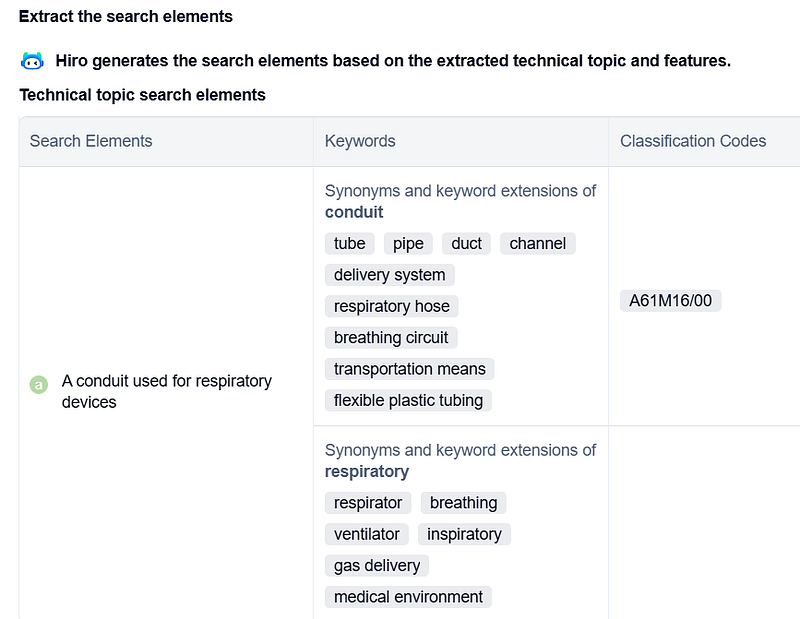
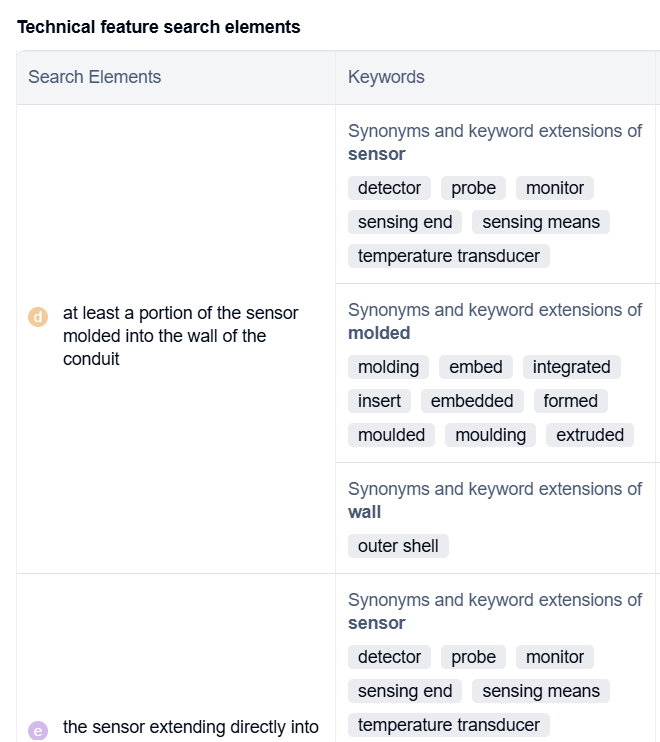
- Feature Refinement: The system automatically identifies the seemingly unique aspects of the technical features (though I am unsure of the underlying logic it uses). I found its execution here to be quite precise, successfully filtering out conventional technologies.
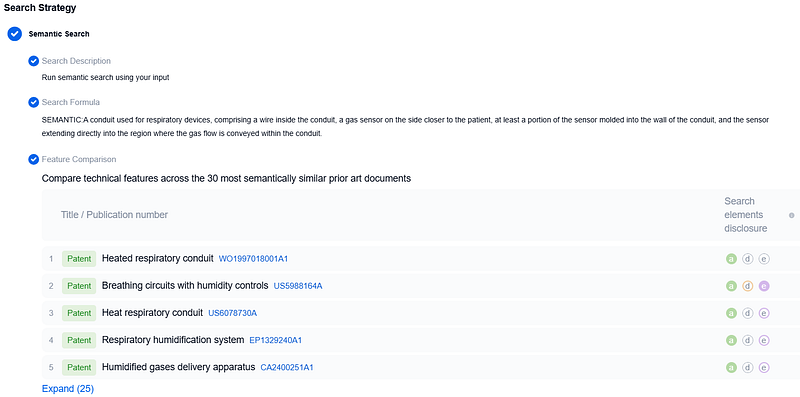
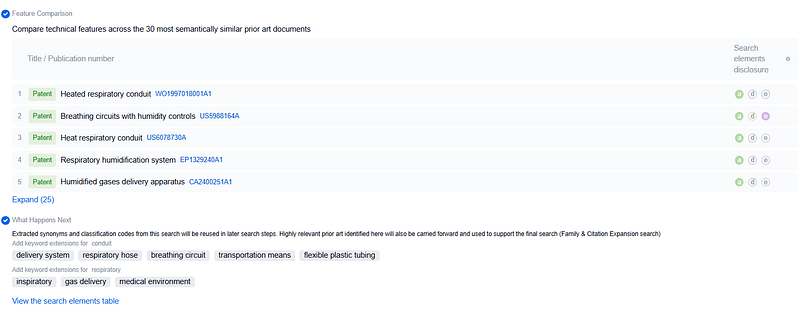
- Semantic Search: The actual search kicks off with a semantic search of the initial technical solution to retrieve the 30 closest prior art references. The most relevant results from this batch are then used to further optimize the keywords and classification codes.
- First Boolean Search: Following the semantic search, a Boolean search is conducted. The system then compares the retrieved patents against the original technical features and further expands the keyword list.
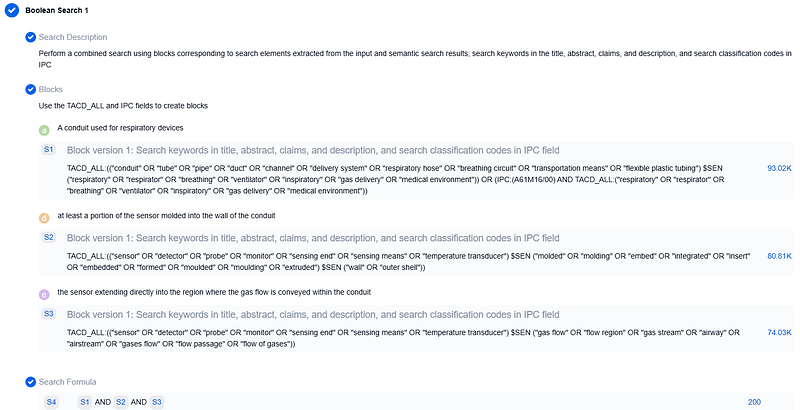
After the search is complete, the system will compare the retrieved patents with the original technical features. Additionally, it will expand the keywords once again.”
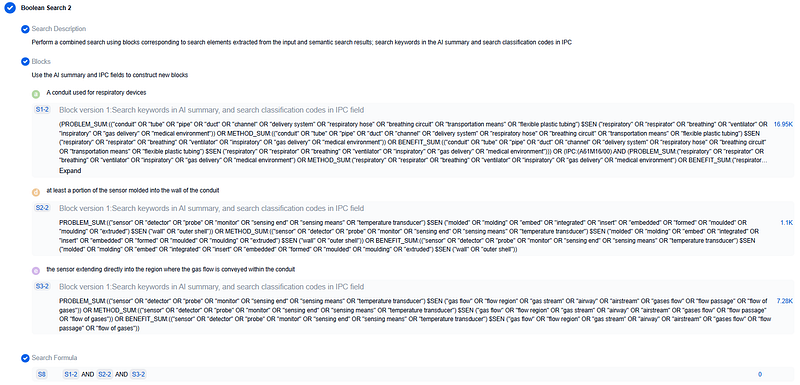
- Second Boolean Search: The search fields for this round include Patsnap’s own AI-generated summaries for each patent. However, in my test, the system reported finding no additional useful prior art in this round.
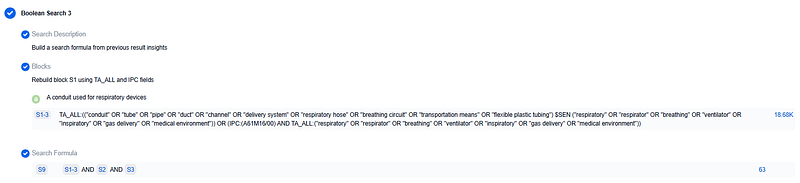
- Fine-Tuning (Rounds 3 & 4): The third and fourth rounds primarily serve to fine-tune the results obtained from the first search.
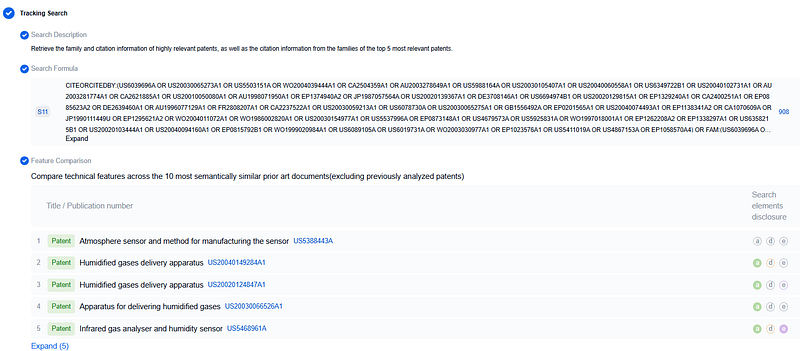
- Tracking Search (Round 5): This is a unique step where the system performs a “tracking search” on the patents deemed most relevant in the previous steps, exploring their patent families and citation networks.
- NPL Search: Finally, the system searches Non-Patent Literature. No relevant content was found during this specific test.
The Search Verdict: Looking at the final retrieved results, I consider them to be quite good. The system managed to uncover the exact prior art references that I already knew could be combined to defeat the invention’s inventive step (non-obviousness).
The Bottleneck: Feature Comparison and Inventive Step
After the search phase, the system moves to feature comparison, selecting the three closest prior art references and compiling them into a comparison table.
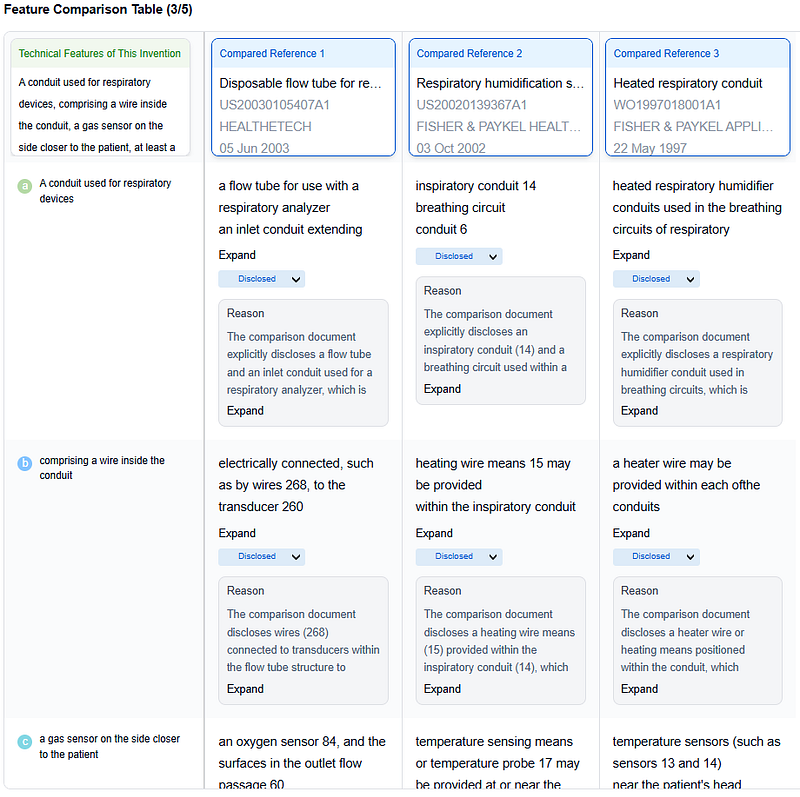
However, in my test, this phase was not entirely successful. The first prior art reference, which the system presumably deemed the closest, was actually an invention from a vastly different technical field. It was retrieved simply because it coincidentally matched the keywords for each feature. Upon closer inspection, the components were substantially different and scattered throughout the specification.
This reference cannot be considered novelty-destroying prior art. Yet, the system concluded that, when combined with the knowledge of a PHOSITA, it could disclose the present invention.
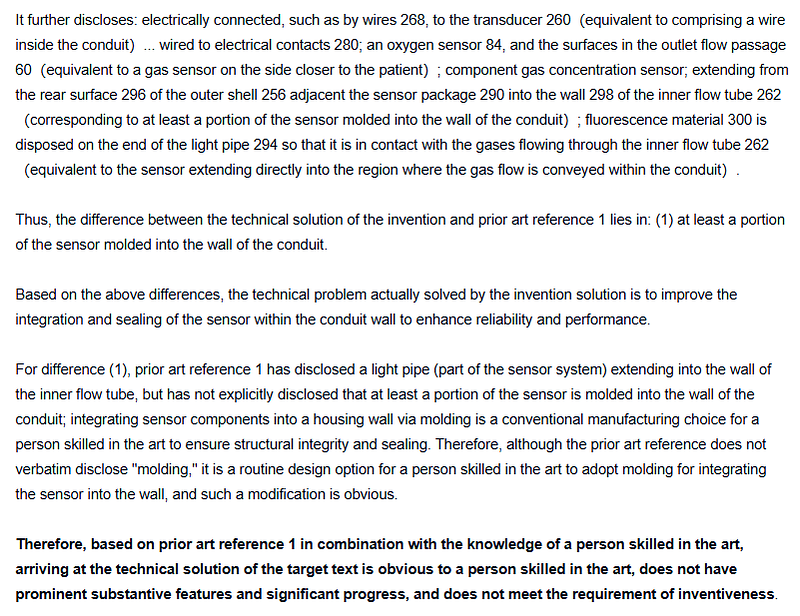
A few technical observations on its analysis:
- Jurisdictional Approach: Judging by the text, the AI’s approach to determining the inventive step (non-obviousness) aligns more closely with EPO or CNIPA practices, rather than the US (USPTO) approach.
- Accuracy: Regarding the key features, I disagree that they were disclosed by the prior art (a conclusion previously supported by the PTAB, which also held they were not disclosed by similar prior arts).
Conclusion
In short, the primary advantage of this tool is its sheer speed; there is a very high probability of finding useful prior art in just a matter of minutes.
While the system falls short in deep analysis, it still has the potential to be a valuable analytical aid. Even an incorrect prior art reference generated by the AI might spark inspiration, allowing a sharp patent attorney to leverage their own expertise to combine prior art from different fields effectively.
Furthermore, I presume it is termed a ‘Novelty search’ due to their acknowledgment that determining inventive steps is currently quite challenging.