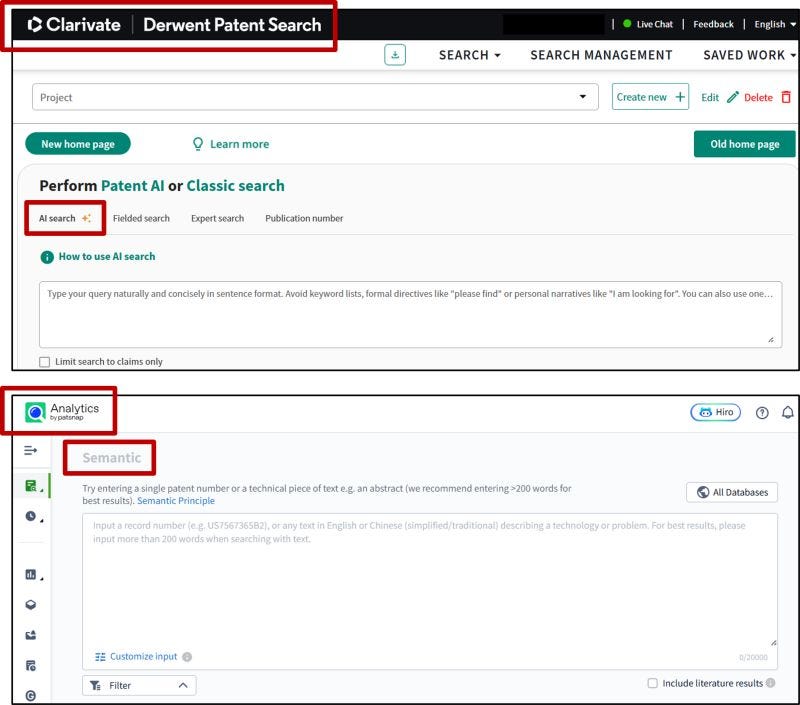
I have been running a prior art recall test on both platforms. Before comparing how much each tool finds, I checked something more basic. If I run the same query twice, do I get the same list?
Derwent (from Clarivate) returns the same list every time. I ran identical queries on different days and compared every record in the export. The results were the same, including the order. If I hand a colleague my query, they get my list.
Patsnap does not guarantee that.
Under the same conditions, Patsnap often returns a different result each time. This covers both which prior art comes back and how those documents are ranked by relevance. The ranking is the part that matters. A tool can find the right prior art and still bury it. If the document lands past the 500th result, the searcher may never read it, so in practice it was not found.
The question is not only whether the tool found the right documents today. It is whether someone can reproduce your work next month.
I want to be fair to both tools. Reproducibility is not the same as quality. A system that returns the same wrong answer every time is still wrong, and a system that surprises you might be surprising you with better results. Which of these two actually recovers the examiner’s prior art is a separate question, and it has a different answer.
One more thing worth sharing. In a traditional keyword search, you do not know how many results your query will return until you run it. The number falls out of the data, because a keyword either appears in a document or it does not. These AI search tools behave differently. The count is always the same, or it stays inside a fixed band. Derwent returns exactly 200 results every time. Patsnap holds the count between roughly 700 and 800. When I tested Patsnap a few months ago it also returned a fixed number, and that has since changed.
The reason is that an AI search ranks documents by relevance instead of matching a term. Someone has to decide where to cut the relevance off, and that cutoff is the vendor’s choice, not the searcher’s.
What I find interesting is this. Many products now say they have AI inside. We are rarely told where the AI sits in the process, or what it actually does there.
Next post: I will report the numbers — how much of the examiner’s prior art each tool recovers, where the hits land in the ranking, and what you get when you use both. My testing so far puts Patsnap slightly ahead, but I need more samples before I would stand behind that.