
A report “2025 Survey Report on AI Usage by Taiwanese Legal Professionals” was published by Taiwan’s AI legal startup Lawsnote recently. Founder Barry recently explained some of the content during an interview., and I will briefly explain and offer my own thoughts.
AI adoption rate among Taiwanese lawyers has already exceeded 80%. This is significantly higher than the 30% seen in US law firms.
Reasons for the gap: Taiwan has a high demand for foreign language translation (a need US lawyers typically don’t have). Barry believes many in the US legal community view using AI as a sign of unprofessionalism, which suppresses adoption.
My Take: Regarding the higher AI usage in Taiwan, it might be as the host suggested: many US lawyers use it secretly, so firm-level surveys fail to reflect reality.
Corporate Policy & Efficiency: The report also mentioned that AI usage is highest among corporate legal and compliance departments, which is significantly higher than the usage in law firms.. Most companies don’t establish specific rules for AI. Companies likely avoid strict rules to tacitly allow lawyers to use AI, or they simply refer to existing policies without creating specific AI measures. I believe it is the correct approach.
Judicial Resistance: The judicial system also wants to introduce AI, but it has sparked backlash in Taiwan. Even courtroom voice recognition, which helps clerks, is only used by 10% of judges.
Data Security (Cloud vs. On-Premise): Many large Taiwan firms avoid the cloud, but Barry argues that platforms like Google Cloud Platform (GCP) often have better security measures than local servers.
My Take: Even if you trust in on-premises security, it likely won’t yield better performance than external services.
Structural Shifts in Law Firms: Law firm structures used to be pyramid-shaped. However, because AI has reduced the need for manpower, the structure is shifting toward a cylinder shape. That being said, AI can handle simple contract reviews but fails at complex conditions. Moreover, some necessary data (e.g., live negotiation dynamics, company status, bargaining power) is often offline or hard to provide.
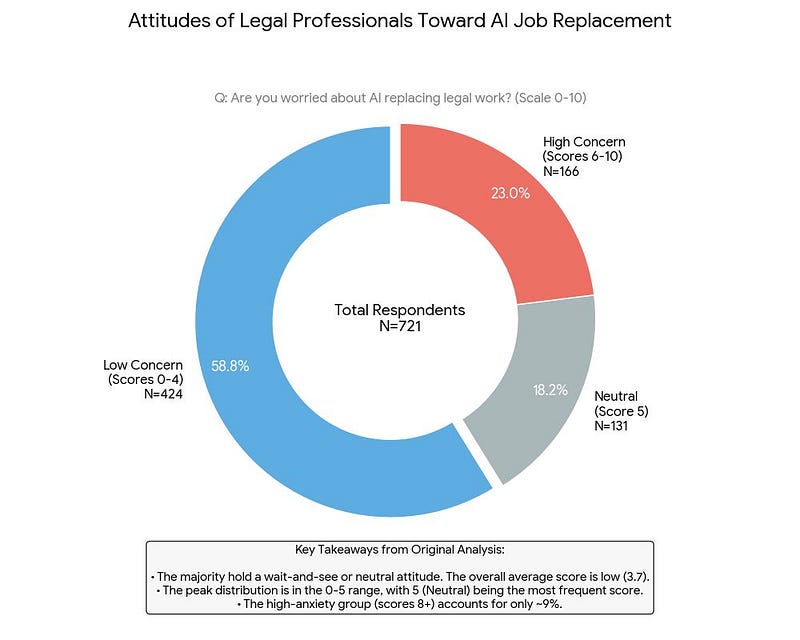
Legal professionals aren’t overly worried about replacement. When AlphaGo won in 2016, people predicted the end of lawyers, but nothing happened. Unlike translation or illustration, a lawyer’s core work involves synthesizing many complex tasks, creating a significant barrier to replacement.
Will this time be different? Perhaps.